Thursday, July 15, 2010

Starting this email on my Iphone while sitting in yet another traffic jam, and with a GI system on the fritz and temporarily tamped down with a steady regimen of Cipro and Immodium on the way to Dali- the next overtouristy "traditional" old Chinese town on the trail south. At least we are in a scenic rice paddy, though too bad its raining again. So- I'm well aware that there are stereotypes out their about driving, and well aware that I keep harping on the traffic in this country and don't want to play into it, but I do just want to comment a bit more on the insanity of road travel in a country where everyone has just learned to drive in the past five years. Its insane. We left our great hostel, Panba in Lijiang, probably the best hostel I've ever stayed in, although Christmas themed for some inexplicable reason- Merry Christmas written everywhere and a stocking hanging on our door. Our taxi to the bus station took us down a terrifying but not atypical three lane road- sort of a lane for one direction, sort of a lane for the other but most cars seemed to prefer swerving in and out of said middle lane. Furthermore, without exaggeration I can say that every single trip we've taken of more than two hours has involved waiting around at an accident scene watching people who've crashed their cars / buses/ trucks /tractors into each other argue for hours about who is at fault, with no sign of police or any kind of officials doing anything beyond putting on their sirens so that they can get past the scene of the accident. And half of the trips have spotted a car, truck or bus thats gone over the side and into a ditch. Uh-oh, This accident appears to be an overturned bus, which is sort of changing my appetite for taking an overnight bus from Dali to Kunming... Good thing we are moving becuse the movie on the bus has ended and it is now on to showing Karaoke videos. No, I'm not kidding. That god the passengers arent singing along- not too many of them anyway...

Okay, now in Dali, AKA Xiaguan. These towns are starting to blend together like the Unesco-fied colonial cities of Latin America. Beautiful to be sure, but we are ready to do something else pretty soon. And the rain isn't helping, and apparently Lijiang had a few deaths from flooding yesterday. Dali however has a bit more of a run down feel than some of the other towns we've been to- seedy almost, dirty, a bit rough around the edges, and more more for Western backpackers than Chinese tourists. Is that why I like it more, or is it the seediness- not sure.

No other particularly enlightening observations at this point. Some wacky things- I went to buy potato chips and all they had were chicken, beef, pork and corn (!) flavored chips. I opted for corn, which were very strange, though not as strange as the corn flavored candy. There is also some weird brand of car here that makes the collectivo style minibuses that have as their logo the starfleet insignia, which is kind of awesome. Bus station sold lighters that had Bin Laden on one side and George W Bush on the other. Food continues to be good if Szechuan, some fun deep fried ribs and Kung Pao chicken, and the other odd things about restaurants are that there are no napkins, place settings come to the table shrinkn wrapped and you have to unwrap them, and they sell the local rotgut alcohol in single serving shot glasses that are sealed. And if you ever do go to China, I know I mentioned it before, but the Pleco app for Iphones is super fun way to pass the time. Draw Chinese characters as best you can on your screen, and they translate automatically. (Watch video here). The other news is that our two year old Lonely Planet is also hopelessly out of date- there are now trains everywhere, and tons of stuff exists that didnt when the last edition of Southwest China came out.

Monday, July 12, 2010

Confucian Confusion


Well, farewell Tibet for now. Had a interesting final chat with our guide/minder "Jesse/Tsetse" as we stood urinating next to a bridge draped with prayer flags on the way to the way to the Lhasa airport and he expressed for the first time some emotion for the first time about the Chinese occupation. I told him that many in America and the West care about Tibet, but thought to myself later about how our actions- the desire for cheap Chinese anything, ultimately belies and betrays our words. The scene at the airport itself felt somewhat laden with meaning, arrivals seemed to be full of soldiers and departures full of monks. Symbolic? You tell me, or maybe we just arrived on a particularly ironic day.

Anyway, the flight to Shangri-La in Yunnan Provence was easy enough. And let me say a few words about airlines. Chris, you might ask, you're an intrepid traveller, what are the best and worst airlines in the world? We all know the American ones are decades past their glory. Europe? Please! Not much better. What about Japan Airlines, please fulfill my stereotypes about the orderly and clean Japanese! Nope, the same shitty food, seats and attitude as the major Americans. The best airlines my dear reader are found in developing countries, aspiring countries. Royal Thai, India's Kingfisher, China East, I bet Korean Airlines is great. They load you up with swag beforeyou're even sitting down- various bottles of tea and water, stuffing your pockets with pens and mints, multiple full meals on 45 minute flights, even today on China East it's a complementary mystery box of four tablets from "Yunnan Mingjing Pharmaceutical Ltd."

Regardless. We made it to Shangri-La, and so now, here's the story of Shangri-la, not to be confused with the legend. The scenic Himalayan town of Zhongdian in Yunnan Provence decides a few years back to rename itself Shangri-la to boost tourism for the great and growing middle class in The New China. Tourism booms, and charming old neighborhoods are demolished for high rise hotels. Tourists and their yuan stop coming because quaint village is now gone. Local town fathers come to see the tragic irony, but no so aware of irony that they decide to build overnight from scratch an ersatz "old city" with antique style buildings and suspiciously even cobblestones that now overflows with trinket shops and hotpot restaurants. Yep- irony dies faster in The New China than a nascent democracy movement. The whole place feels a bit disney-esque, or like a movie set. Peek down an alley and catch a glimpse of workers furiously building a new old style building, saws humming and hammers swinging and the whole place still smells of sawdust and fresh wood varnish with probably none of this here even a few months ago. Giftshops sell more Tibetan crap than I saw in Tibet, plus tons of animal pelts, real and fake, and overall its a bit of a shock to see so many tourists, both Asian and Western after Tibet, which had at most about 200 westerners in the whole region last week. Had the most expensive and worst meal in China yet (okay, the barleyflour and yak butter tea was worse), at an overpriced tourist joint (hard to find much else) where we had the yak hot pot- 80% gristle and fat, 19% bone, 1% meat. The streets are full of tourists and the occasional tribal woman from the hills wearing an elaborately embroidered vest and fuchsia turban, of course she is getting crowded out by the Chinese women in their fake tribal costumes.

Our plan to do some trekking north of here was shattered by the disappointing news that due to construction, only one bus every 10 days goes north. So looks like we're stuck here and then tomorrow its on to "Tiger Leaping Gorge." We've now made it down to Lijiang, another scenic town with a real old town. Buses were sold out so we waited in the rain at the Shangri-La bus station- fairly typical developing world bus station (which is to say, generally nicer but more chaotic than those in the states). Watched the weird apple-green three wheeled taxis pull up, which look like a 70's vision of the future, (kinda like the cars in "Sleeper"), and unload passengers with laundry baskets of live chickens- not so unusual, but then seeing someone unload a BAG of live chickens- that was a new sight for me. Horribly uncomfortable busride, though through some beautiful foggy mountains with scenic villages looking straight out of Crouching Tiger or something, and then some pretty grim communist era "new villages" where the pigs and dogs fought over the trash- which was ironic, because really there was plenty to go around.

Anyway, Lijiang is beautiful and now I'm feeling a little more optimistic about China. Tomorrow we'll be trekking the gorge...

Friday, July 9, 2010

No Rest 'till Everest

I'm trying to stay calm after accidentally deleting the last three days of writing... But here goes...

If I didn't explain this before, one needs an "alien travel permit," many permits in fact, to travel here in the so-called Tibetan Autonomous Region. And a Chinese government approved guide. And to leave Lhasa of course you need a driver because you can't just hop on a bus alone. So after months of emailing and document mailing and money wiring we got things all arranged for said permits and guides and drivers, and allow me to introduce the characters: We have a tall grumpy driver named Tawa- who continually presses cheap Chinese cigarettes on us despite our protestations and "Jesse" a soft spoken guide who speaks a bit of English and and Mandarin but mostly of course Tibetan, which is a little frustrating. But hey, we really didn't pay much for this so...

So off we went in our van (that had a sticker on it that said "land cruiser") out of Lhasa p
refecture and into the countryside, first nosing our way through the insane traffic of Lhasa, past the Muslim butchers on the edge of town, standing proudly in frontof massive yak carcasses in their shops, and onward past soldiers at attention in bulletproof glass boxes looking like mannequins or like toy soldiers still in their plastic boxes. Finally we made it out onto the "friendship highway" (friendship between who and whom I wonder?) a charming two lane country road where the insane driving and honking began in earnest, and I began toget a flavor of hinges driving I've heard so much about. At regular intervals there were five cars passing each other at once, with ample use made of both shoulders. And the road itself was filled with all manner of machine and beast- dogs and cats, goats and yaks jostled for space with tractors, pilgrims, nomads, trucks and land cruisers (a
nd Buicks of course) and EVERY ONE of which Tawa, our driver honked at. Commencing the honk from a distance of about a half a mile from each object which meant of course more or less constant honking. It was like a child getting to play driver as if the best thing about driving was gleefully honking. Even in the countryside, without much around it seemed incessant- I swear Ben and I looked at each other once and asked each other if Tawa had just honked at a tree. Yet, somehow either Tawa's driving or the dashboard ornamented with Boddhistavas and Buddhas and prayer flags kept us safe.

No matter, there was a lot to see along the way out to the city of Shigatse, where we'd spend the night and then onward to Everest. We paused at a mountain where our guide pointed out ladders painted on the side and explained that the mountain was still used for sky burials. A sky burial is a traditional Tibetan funeral, in which the body and organs are chopped into pieces and left ona mountaintop to return to nature,and the skull harvested to make a drinking cup (yes, we saw them for sale in the market) and the human femur made into a flute (yep, them too!). These serve both as offerings to the natural world and reminders of life's impermanence.
Stopped briefly at the scenic and holy salt lake of Yamdrok-tso, the shores of which pilgrims ceremonially circumambulate for seven days and which busloads of Chinese and Korean tourists unceremoniously dump their candy wrappers and plastic water bottles. From there we stopped briefly in what looked like a dusty town straight out the American West (save the Chinese and Tibetan signs) to the amazing monastery of Gyantse where there was also an amazing hilltop fortress straight out of the Tibet of my imagination. Onward past more monasteries nestled in the mountains, bright red and gold against the brown mountains, past one with a female incarnate lama and the monastery famous for practicing mediations that superheat the body to survive for days outside in the Tibetan winters.

We drove onward through the Himalayas about 20 miles north of the Bhutanese and then Indian frontier and finally arrived in Shigatse, second largest city in Tibet a depressing town by any standard, and its most redeeming quality being that the feeling of occupation by the Chinese was less apparent than in Lhasa. Still, the crackdown a few years ago and subsequent steep decline in tourism meant almost no restaurants that cater to westerners (as I mentioned in an earlier post, there can't be more than a few hundred westerners in all of Tibet right now) so we found the one restaurant with an "English" menu, passed on the steamed yak tongue and fried sheep lung specialties and got some delish pork with chilis that we only hoped was pork and not the enormous rat we'd seen scurrying around that suspiciously disappeared after wed ordered. The spiciest thing I'd ever eaten, it was delicious, so spicy that the pungent garlic tasted almost sweet. And much better than the breakfast offered this morning- yak butter tea and barley flour. Yes, take a spoonful of barley powder and a sip of tea and make porridge in your mouth! God it was awful. And yak butter tea, the ubiquituous beverage of the Tibetans- imagine if you will hot rancid milk, but saltier and greasier, and that will give you some sense of yak butter tea, which is just yak butter melted into hot water. Ugh, just the smell of it now makes me nauseous.

Anyway, onward we went, over 16000 ft passes bedecked with prayer flags, through flourescent green barley fields, all the while mountains looming in the background and the clouds barely above us in the enormous sky. We passed valleys dotted with nomad encampments and wild yaks and goats, hilltop hermitages and temples ancient and crumbling and temples more recently restored, past smaller and smaller villages of traditional tibetan architecture- whitewashed walls and mud bricks drying in the sun. We passed a monastery with a female incarnate lama, and the monastery best known for the monks who practice meditations to superheat their bodies to meditate outside in the Tibetan winter. We even passed within a few miles of the cave of Milarepa- Tibet's most famous magician-saint. Multiple miltary stops (Checkpoint Charlie Chans?) where we waited around while barely pubescent People's Liberation Army soldiers triple checked our passports and "Alien Travel Permits." Finally we came to last village of any size where the only thing they sold was water, cigarettes and oxygen cannisters, (really, I could have used those more in Beijing!) bought our water and turned down a dirt piste for the last bone jarring five hours. Everest (Qomolongma to the locals) began to appear, revealing a bit of her shoulders or flanks from behind a cloud then disappearing again. We finally passed the photogenic Rongphu Monastery - highest in the world, and one of the places one can stay near the base camp. We pressed on a bit further to a small nomad tent village where we ultimately spent the night in the shadow of Everest. We were well fed by our nomad family- some soup with homemade noodles and unidentifiable yak parts floating in it, and dipped outside for a now fully clear view of the world's highest mountain as the setting sun lit it up. Then, to bed, where we slept on blankets and carpets, kept warm by a stove that burned yak dung. The mother of the family sat around knitting and tending the yak dung stove while her kids ran around in their crotchless pants (cheaper than diapers I suppose, and greener? maybe?)

Up early to drive and then clamber the rest of the way up to base camp. Don't really know how to describe it- it was amazing and inspiring to be standing on that mountain. Base camp wasnt much- a hut, another army post, Tibet's worst toilet, and a whole lot of prayer flags and yaks. But just incredible, indescribable to be standing on that mountain... And to be at 16000 feet and knowing that the mountain is another two miles up vertically. So I suppose can say I came within a few miles of the summit of Mt. Everest?

I wonder what will happen when the glaciers melt on these incredible peaks, it will make climbing different for one thing, but certainly impact all of the rivers across asia- the Yangtse, the Mekong, the Indus and the Ganges...

The ride back, though beautiful, was interminable, now that we were just heading back to Shigatse. But we got to see the impressive Tashilunpo Monastery, seat of the Panchen Lama, second highest lama in Tibet and who chooses the next Dalai Lama (thus the Chinese are trying to control the Panchen Lama, in an long story of intrigue I wont get into but you can read about at Tashilunpo.org or probably on wikipedia). Tashilunpo is in great condition, probably because, as rumor has it, the place is riddled with Chinese spies and monks who have collaborated with the communists. It is like a medieval walled village, the outer wall lined with prayer wheels, and then a kora or circuit for pilgrims to walk inside, and it was again packed with pilgrims carrying their yak butter in nescafe commuter mugs tucked into their silver and turquoise clasps and pushing us along on the tide through the various temples. There was Tibet's largest Buddha at 26m (sitting down!), and numerous gold and silver stupas towering above us,and outside just amazing little cobblestone alleyways to wander around.

And from there, it was another five hours back to Lhasa. Uneventful with the exception of an amazing Szechuan lunch with a menu completely in Chinese. Our guide, who's English is limited and Mandarin apparently even more limited, unhelpfully pointed out everything on the menu and explained it as "meat with vegetable." Yes Jesse, but what meat, with what vegetable. We ultimately resorted to "menu dipping" pointing at random to two items on the menu. At least we knew the chicken and eggs would be fresh, local and free range as they were wandering aroud the front yard. And what we got was incredible- spicey chicken with ginger and squash and an amazing sliced potato with pork belly stirfry. Wow. Much better than the yak burger I had later (which incidentally, tastes just like a veggie burger. So my vegetarian friends, if you are thinking of eating meat- start with a yak burger).

Well, that was a long entry. Now, in a few hours we depart Lhasa and fly to Shangri-La. Yes kids, there is a Shangri-La, or at least a town the Chinese government decided to rename Shangri-La to boost tourism!

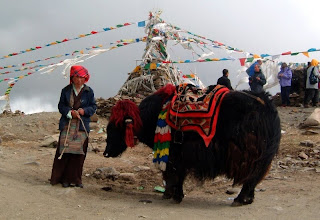
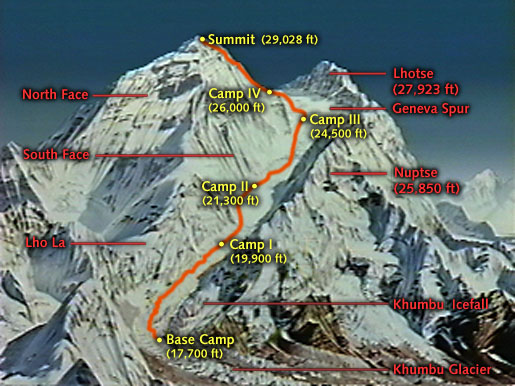
(Pictures: Ben & I at Everest, Yak, Gyanstse, Jesse & Tawa in the Nomad Tent, Map of Everest,)

Wednesday, July 7, 2010

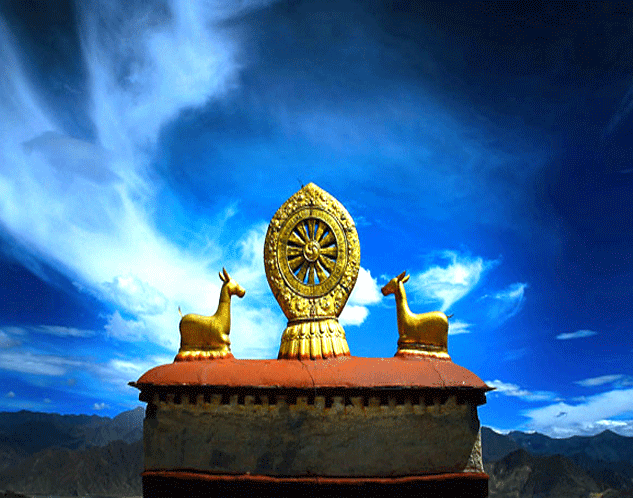
Yakity Yak- Don't Talk Back (especially not to the People's Liberation Army) or You Must be Jokhang

I don't know whether the terrible night's sleep was due to indigestion from the yak BBQ I had for dinner or the altitude or delayed jetlag or what, but I was thoroughly exhausted waking up this morning. I even fell asleep on a table over lunch. There is also only one time zone in China, which means that I even though I woke up at 6ish, crack of dawn was still hours away. Anyway, we got up and basically watched the sunrise over the Potala from our hostel's roof, while below the police loaded themselves into their armored personnel carriers and the garbage trucks collected the garbage to the incongruous bleeping electronic tune of happy birthday to call people to bring their garbage out. (And I wonder if Chinese tourists to America write emails back to friends in China saying they sing each other the garbage song on birthdays in America). Overlooking the the city were plumes of smoke and I wondered momentarily if there were riots or fires in the old quarters, but realized it was plumes of incense smoke drifting up from braziers on the pilgrim circuit as pilgrims tossed juniper and barley in by the fistful, and lending the city a sweet, if suffocating smell.


We headed down and wandered a bit around the Barkhour circuit- an ancient pilgrimage circle weaving through ancient alleyways around the Jokhang temple, the holiest site in Tibet, (the Vatican of Tibetan Buddhism I suppose you could say) with all the hundreds of pilgrims and prostraters (and definitely no protesters). Many wore pads on their hands, leather aprons with rubber reinforcements and even reinforced shoes to protect themselves from the hundreds or thousands of full body prostrations they made around the temple, their foreheads bleeding and filthy and bodies surely weary by the day's. Many held out their aprons for pilgrims to stuff money into to earn merit for their reincarnation. There was even a man with one leg who we saw in the morning and then again later in the day, still at it making his way around doing full prostrations. The circuit and temple were packed with pilgrims from all over, with traditional yak wool smocks, brightly colored yarn braided into the hair of both men and women, and somewhat incongruous but ubiquitous cowboy hats. There were also dozens of feral lapdogs in the procession, yes, Lhasas and Pekingese, adorable if a bit shaggy, but likely rabid. The people here in Tibet are also also consistently genuinely friendly and curious, very soft spoken and, not to be creepy, but Tibet easily has the highest percentage of beautiful women I've seen in any country, even Colombia.

We then entered the Jokhang itself, jostling our way through claustrophobia inducing crowds in the tiny medieval corridors thick with smoke and lit only by yak butter lamps. Many pilgrims had purchased thermoses of melted yak butter to add to the lamps as offerings as they muttered prayers over the flickering lamps. The smoke stained murals of demons and boddhisatvas combined with the smell of incense, sounds of chanting and throngs of traditionally dressed pilgrims really felt like something out of a fairytale storybook stereotype of "Mystical Tibet." Of course, the obnoxious hordes of Chinese tourists didnt allow the feeling to last, and the greasy-with-spilled-yak-butter floors also made it critical to focus on watching your step.

Our guide/minder was unfortunately not very helpful in his broken English, and there was also that awkward and uncomfortable interactions that can happen sometimes when travelling where one know more (factually speaking) about certain cultural sights and such than the locals (actually Tsetse I'm pretty sure that's the fifth century, not the twelfth century...). And what is up with my terrible habit of speaking back to people with accents in accented broken English right back to them, as if they can understand me better. Yes, yes- tomorrow go with taxi Potala Palace? Ugh. it makes me feel like such an ugly American...

The afternoon was spent at Norbulinka, the Dalai Lama's somewhat run down summer palace, parts of which we couldn't visit because there were pictures of him there, and yet some wonderful gardens and lakes to wander around and relax, kind of what I'd hoped the forbidden city would be but wasn't. There was also an amazing broken English explanation of the place, that I tried to photograph here.
From there onto another temple, Sera, the second largest monastery, once home to almost 7000 monks, then none after '59, now back to about a tenth its former size and slowly rebuilding itself as evidenced by the tittering girls pushing around wheelbarrows full of cement. Admittedly, by this point the statues and stupas were starting to blur together as temple fatigue started to set in, but the grounds themselves were breezy and pleasant for a stroll until we came to the courtyard of the debating monks. We sat in a circle as young monks drilled each other on questions of theology and Tibetan history, demanding answers with a sharp stomp of the foot and clap of the hand, almost like a baseball pitcher's windup. Near-full-contact academic debate, which, in spite of understanding no Tibetan beyond "Teshe Delek" (hello) was extremely amusing.

Now for a stroll around town and some dinner. Oh, and today's best Chinglish? Well Simpsons fans, I'm not making this up but a shirt that read "Nestle Chocelate Malk."

POTALA PALACE:

I'm writing from an internet cafe, in fact the only internet cafe in Lhasa and what advertises iself as "the best toilet in Tibet." And from what I've seen so far I'd have to agree, though still amazing that you can't flush toilet paper in the best toilet in Tibet. Its also packed with white people, the most we've seen- there are probably no more than a hundred or so in all of Lhasa right now.

So today was a trip out to the Drepong monastery- largest in Tibet and nicknamed the rice pile due to it's extensive rambling of white buildings and temples on the side of a mountain. Very cool and just unique enough to not feel exactly like all the other temples which do start to blur. From there it was down to the Potala Palace, well down and then very much up, the 300 year old hilltop palace of the last nine Dalai Lamas, until thee 14th fled in '59. First of was the obligatory photogrpah with a Chinese tour group, before entering- not as bad as the photo taking and stares in India though. (see blog 7/08) Maybe we should rent ourselves out though -seems to be good money in it...

Kinda an eerie feeling walking through the Dalai Lama's bedroom, his alarm clock still next to his bed where he left it 50 years ago and now and has been unable to return, yet I can shuffle through with dozens of Chinese tourists and gawk. His bedroom window also now looks out on what used to be a village and now is a massive communist style monument to the 'liberation' of the Tibetan people by the PLA. And let it be noted too that the top of the palace flies a positively MASSIVE Chinese flag, lest there be some confusion. Not to mention the fact that possessing a Tibetan flag can get you arrested.

Interestingly however, the 50yuan note, second most valuable banknote in China, has the Potala on the back. I feel in some ways that this sums up the complicated relationship between the so called Tibetan Autonomous Region and the Peoples Republic. Not just that it's about money, but the cultural exploitation for money is part of the irony given the busloads of Chinese tourists. On the one hand, it suggests that china values Tibetan culture enough to prominently display, and to not completely destroy this place as very nearly happened during the cultural revolution ( and did happen to 3000+ temples in Tibet). And yet such a display also sends an undisputable message that Tibet is a part of the People's Republic. I can only wonder what the Tibetan people feel about this- pride, conflicted, resentment? I'd ask but I can't - you never know who could be listening... Okay, enough philosophizing.

But the palace was cool- amazing in fact, countless temples with solid gold 3D mandalas and gold leaf stupas, 40 ft Buddhas and boddhisatvas, as well as the red and black faced demons who are the Buddhas protectors, (Varjapani and Hayagriva) a meditation cave, and over 1000 rooms, of which we got to see about 20. It did feel somewhat sterile though- Chinese guards, no incense and chanting and missing the vibrant lived-in feeling of the monasteries that have been coming back.

Monday, July 5, 2010

Beijing to Lhasa


The great wall lived up to its hype. Pushing through early morning Beijing rush hour traffic we worked our way through the hazy morning smog of Beijing- so polluted that you couldnt even see a quarter mile ahead down the road, and past seemingly thousands of cranes (no, not the beautiful delicate birds) assembling new megablocks of skyscrapers that made Co-op City look like a quaint country village. Past demolished gray brick hutongs (traditional neighborhoods) now just piles of bricks, and then out of the great megalopolis of Beijing and into the "countryside" where we passed demolished traditional quaint country villages that were rapidly being converted into McMansion suburbs all in the name of The New China. If the cultural revolution can't stamp out the old, so-called Chinese-style capitalism clearly will. Past giant power lines we travelled, and through a village with a supermarket called "Playboy" complete with the bunny logo, a few army bases and assorted junkyards and factories.

Finally we arrived. We had signed up for the "Secret Great Wall Tour" which promised a 10k hike along an untouristed part of the wall, and were dubious about these advertised claims, but our van, after passing through a few great wall spots clogged with buses disgorging tourists, ultimately stopped at a completely abandoned and crumbling section and let us out to make the hike. The mountain air was somewhat better than Beijing, where the joke is that to get some fresh air you should smoke a cigarette, and the breeze was a welcome relief in the punishing sun. (And Yes, Mom, I wore sunblock!) Yes, the untouristed bit of the wall was also in a state of some disrepair it must be noted. After the slightly disappointing day at Tianenmen Square and The Forbidden City, my jaded self was truly impressed. The great wall is also insanely steep as it winds over mountain passes, and we slogged our way up some relatively intact steps, and then sections that were near vertical inclines with stones that crumbled and fell onto whoever was hiking behind, which made for a pretty Indiana Jones-esque experience. That and walking along sections with undergrowth, and in fact overgrowth- trees and bushes higher than our heads in places and sprouting out of the wall. A few hours later we'd hiked our little piece of the wall, and our eighteen year old fresh-faced guide declared "you are now true men and women having made ascend of great wall!" Busride back included some standard chatting with the various other expat English teachers, exchange students and gap-year Aussies who, all things considered, were pretty cool. Seem to be more Americans in China than most other places I've travelled besides Europe.

After spending some time at the hostel trying to nail down the last details of our Tibet trip, we headed back across Tianenman Square to a night market purported to have the best, or at least most interesting, street food in Beijing. And yes folks, I ate a scorpion. And a snake. I passed on the donkey penis, starfish and seahorses, and definitely did not have it in me to try to rat or the tarantula. Nor did I brave the heaping piles of tripe everywhere I turned. And I'll admit dear readers, that although I was looking forward to eating snake, I would not have tried the scorpion had Ben not fearlessly ordered a skewer of "medium scorpion please" first. Taste? Kinda like greasy chicken skin. And the snake, kind of like eel, though they loaded it up with spices so much that really the only thing objectionable was its surprisingly rubbery texture, but then, what other snake do I have to compare it to? Oh, but the pork buns? They would put David Chang at Momofuku to shame.

Back to the hostel for the best night's sleep in some time, then this morning up early to fly to Tibet. I can't deny it, I was pretty excited when the officer asked for my passport and then said "papers please" and we got to hand over the "Tibetan Autonomous Region Travel Permit" addendum to our visa that was months in the acquisition. Okay, I'll admit it, he just gestured and I said, "oh, papers please?" and he responded "yes yes, papers please." The flight itself was relatively straightforward, a brief stopover in Chengdu, a city of zillions somewhere in western china with a nicer and larger airport than anything I've seen stateside or even in Europe, and a bumpy but reasonable landing after flying not above, but next to the Tibetan Himalayas. The flight to Lhasa, interestingly, was about 95% Han Chinese, a couple Mongolians, and I counted nine White folks. This tells you something both about China and Tibet, where in Lhasa the ethnic Chinese outnumber the Tibetans 3:1, and Tibet has apparently become the new hot travel spot for young Chinese yuppies. We deplaned, gasping like fish for air, not because of the pollution as in Beijing, but the oxygen thin air of a 10,000 foot city (yes, 2x Denver). Our driver and guide/"minder" managed to meet us, and we had a nice drive into Lhasa, stopping to eat some grapefruit sized melon at a roadside stand. The outskirts of Lhasa could be any third world hellhole city- constant honking as we passed luxury cars and donkey carts, pedestrians leading yaks and bus drivers, and we gradually made our way down some giant boulevard past rows and rows of car dealerships, mostly selling Buicks, and then turning a corner and then, suddenly popping into view above the blue glass shopping plazas was the Potala Palace itself, as glorious as I'd imagined it to be. And okay, you know what? I'll do it, I'll use the adjective "resplendent."

And Tibet so far is actually far better and more authentic than I'd feared it would be in all the reading I've done. Certainly it is changed, and certainly the horrors of the cultural revolution left an indelible mark, but Tibetan culture seems indelible in its own way. (for more on Tibet History recent and older, that I won't or probably shouldnt get into here and now, check out The Road Home, My Land My People, Dragon in the Land of the Snow Lion, or Surviving the Dragon). Certainly its a country under occupation, as the hundreds of PLA troops I saw today alone would testify- stationed at every corner, and even not-so-discreetly under umbrellas on rooftops, holding their rifles and scanning the streets for trouble.

But we are staying in the Tibetan quarter, our hotel balcony has views of the Potala and we can watch the pilgrims making the circuit around the Barkhour temple below, dressed in traditional garb, chanting and spinning prayer wheels as they circumambulate the back streets of Lhasa, many having travelled thousands of miles to make this trip to the Barkhour and Jokhang temples. The army soldiers walk disrepectfully counterclockwise, guns in hand and knock shoulders with the pilgrims, but at least the streets are thronged with pilgrims and its not even a festival season. Barkhour square itself is awash in merchants blasting Tibetan hip-hop (straight outta Lhasa?), which drowns out the wails of pilgrims prostrating themselves dozens, hundreds of times in front of the temple. So the good news is that something of the original Tibet very very much thrives here in Lhasa today.

Tomorrow its off to the temples, then the next day the palace assuming we have adjusted to the altitude... More to come...

Saturday, July 3, 2010

I < 3 BJ

Well, I made it. A lovely layover in Vancouver with an old friend for a day, who I think literally took me to EVERY neighborhood in town (thanks Gilli!), then entered metal tube for twelve grueling hours, and exited said metal tube in the brand spanking new Beijing airport (feng-shui compliant!), and easily through passport control where the twelve year old didnt even ask me a single question before ushering me onward toward the light rail that brought me to baggage claim. The subway car was filled with chinese police, also all looking about twelve years old, with mismatched boots and matching fake rolexes, and the CUTEST K9 dogs I think I've ever seen- like beagles and collies and such. The airport, built in time for the '08 Olympics, was incredibly nice, and yet for some reason it will be demolished and rebuilt again to be completed in 2012.
Successfully met Ben at baggage claim, and took a taxi through the smog to our hotel a few blocks south of Tianenmen Square. For most of the drive Beijing looked like a dystopian LeCorbusier-esque supercity of giant buildings and superhighways, full of luxury cars (I guess its either luxury car or NO car here in the New China), most of which were Volkswagens or, inexplicably, Black Buick Regals. I havent seen so many Buicks since visiting my grandmother in her retirement community! Anyway, the hotel neighborhood does appear to be at a normal scale. In fact, its a pretty cool old neighborhood, old low buildings and alleyways crowded with bicycles and rickshaws and peddlers of all kinds selling dumplings and whatnot. Our Hostel is perfectly decent, and full of the usual motley crew of Australian and European backpackers, and thankfully with functioning air conditioning. (As the pilot announced when we were landing, "temperature in Beijing is currently 94 and hazy of course!"). Jetlagged, we stumbled into a phenomenol dinner spot where we gorged ourselves on courses of Peking duck- first came the skin, so shiny and crisp you could practically see your reflection, then the tender meat, withsides of scallion and cucumbers to roll up with the duck in spongy chinese pancakes. Yeah, wow. And so much more appetizing than the rest of the menu which thankfully at least had pictures (donkey meat in spicy sauce, jellyfish with fermented vinegar (redundant, I know), and cow tendon in salty sauce.) Then to sleep, where I was indeed a very jetlagged viking.

This morning up at near dawn for breakfast and then discover than the city was broiling hot and humid even by 8am (theres apparently a heat wave here too!) We wandered aroudn our neighborhood, a lovely shopping area complete with H&M, Uniqlo and Starbucks, and to Tianenmen Square, which was really... just a big square. Apparently the biggest city square in the world. (See pictures, and no, in China, you most definitely cannot access THAT picture of Tianenmen Square, though I wondered what someone would do if one decided to pose in the center of the square holding up your hand like the tank man). Onward to the not-so-forbidden city, which was swarming with hordes of Chinese and international tourists by 9:00, most of whom were smart enough to bring parasols for the blazing sunshine- it got up well over 100 by midday. Parts of the forbidden city were quite cool and impressive, mostly the side buildings and gardens which werent nearly so crowded, though overall, I'm sorry to say, I felt a little jaded but just wasnt that impressed. A few impressive buildings, and certainly a massive scale, but for the most part, it was just a series of giant squares and pagoda-like buildings. Sadly, I've been in so many ersatz pagoda buildings in various Chinatowns and Chinese restaurants that the orginal sort of didnt seem that impressive, and kinda felt a little tackty almost with the red roofs and gold dragons everywhere. I know, I know, I mean, it was impressive, but I think I just prefer other architecture styles- Wat Pho and the royal palace in Bangkok for example, or other places just have more interesting architecture to me than China. We wandered back through some alleys in ou neighborhood, to touts calling out "little brother friend, you come but t-shirt!" as they hawked T-Shirts of Mao, The Great Wall, and the unintentionally funny I <3 BJ in the I <3 NY logo. Plenty of good Chinglish printed everywhere on signs and t-shirts, my favorite being the kid in the NY Yankers T-Shirt. Anyway, back here now to try and stay awake, and on to the great wall tomorrow.

Monday, June 14, 2010

More Ice Cream Experiments: (Creamsicle, Dulce)

So I cook a ton, not sure why the recipes posts are increasingly ice cream focused, but hey, its summer... I've been having a ton of good luck with ice cream making lately- using Cook's Illustrated's phenomenal recipe for Khulfi with no variations, and then building on other people's recipes for dulce de leche ice cream, fresh mint ice cream, and David Liebowitz's creamsicle ice cream from "The Perfect Scoop"- I book I find inspiring in its ideas, but tedious in its actual recipe execution- the recipes are both needlessly complex and needlessly rich- my friend actually got sick once making the chocolate ice cream with its insane number of eggs. I really dont see the need for more than four eggs in an ice cream custard. No matter, I did like his creamsicle idea as a nice idea and a non-artificial version and reference to wonderful childhood memories of creamsicles from the ice cream man. And Liebowitz's idea of using sour cream in ice cream is also an incredible one and is inspiring more ideas for me (key lime, peaches and cream and others- see below.) And hey, its really the only halfway decent ice cream book since my battered childhood copy of The Ben & Jerry's Ice Cream Cookbook.
So with that- my enhanced no-cook version of

Creamsicle Ice Cream

2 Cups sour cream (one pint)
1 Cup Half and Half or Cream
3 Oranges - zested and juiced
1/2 Cup Sugar
2 Tsp Vanilla

Combine zest and sugar in a food processor or blender. Add remaining ingredients and blend until a consistent texture. Freeze, maybe adding mini chocolate chips or or bits of chocolate as well.


Dulce De Leche Ice Cream

First- let me just say that dulce de leche is about as brainless a custard ice cream as you can get. All I've been doing is putting in the blender three egg yolks and three cups of cream, half and half, or whatever combo until nicely blended. Then drop in can of dulce (or about 10 oz) in the blender, and blend- the good thing here is you can fully blend it, or fully blend some of it, and then partially blend in the rest to give it more of an interesting textural contrast. Then, pour into a pan and gently raise the heat until a boil comes and the custard thickens. Chill and freeze in the ice cream maker, adding toasted nuts as you see fit.
Mexican dulce de leche, Cajeta, is made with goat's milk for an added tang. Here again I was wondering whether a half cup of goats milk would add this touch, or even a bit of sour cream into the above recipe.

As I said before, I feel mixed about The Perfect Scoop book, but like some of the recipes concepts. The idea of using sour cream is very intriguing, and once I'm back from China this summer I'm planning to try a few recipes- a Peaches and Cream with sour cream, and a Key Lime Pie. Here are my rough drafts, if you feel inspired to try them, let me know how they work out:

Peaches and Cream
1.5 Cups Sour Cream (or creme fraische)
1.5 Cups Half and Half or cream (depending on your level of indulgence)
1/2 cup sugar
4 Peaches - diced
2 tsp vanilla
3 Egg Yolks
2 T minced candied ginger

Make a custard by blending and then cooking the sour cream, cream, egg yolks and sugar and egg yolks. Stir in vanilla. Reblend the mixture with one of the peaches and peach juice, and freeze according to instructions. Partway through, mix in the rest of the peaches and candied ginger.

Key Lime Pie
I'm imagining basically the same as creamsicle, just using 6 limes and their juice and zest, maybe stirring in crushed graham crackers.